by Dawn Smith-Pfeifer
I have never been a lefse maker. Yes, I have been a frequent lefse eater, but it was never on my bucket list of things to actually produce. I am a quarter Norwegian and three-quarters Swedish, so I had the luxury of lefse at many family gatherings growing up. However, the "stubborn Swede" in me categorically dismissed the idea of making it myself because, "Eh, sounds like WAY too much work."
That is, until a day not long ago, Hubby said, "We have that lefse griddle in the basement from my mother. Why don't we try making some?"
I hemmed and hawed. Substantially. But after I proclaimed, "We can't make lefse without a potato ricer," and we promptly went to the store and purchased one, I could see there was no way out of this.
It was game on.
I still tried to hem and haw, explaining that this might not work because people say making lefse is hard and "dismal failure" has come up more than once. But I didn't want to be the hypocrite in this scenario, where a "How do you know if you don't try?" would come back to haunt me. So I went online to find a simple recipe for the smallest batch of lefse you could make, and found it on the NDSU Extension website's publication Exploring North Dakota Foodways: Scandinavian Cuisine.
This recipe only requires two pounds of potatoes (which I conveniently had in storage), and once I had boiled and riced the potatoes, I put them in the fridge overnight to cool (per instructions, of course), which gave me plenty of time to mull over my next move.
The following evening, while Hubby rode bicycle, I prepped the rest of the recipe and made "lefse balls" and put them back in the refrigerator to keep cold because cold dough rolls better (said various sources on the internet). I had googled what to do if you don't have pastry cloth and settled on using a silicone baking sheet as a base with heavily floured parchment paper on top.
When he got home, I explained to Hubby what I thought the process should look like, and as it turns out, he said, "I used to be a pretty good lefse turner." So, at least he had experience and muscle memory, attributes that I definitely didn't have.
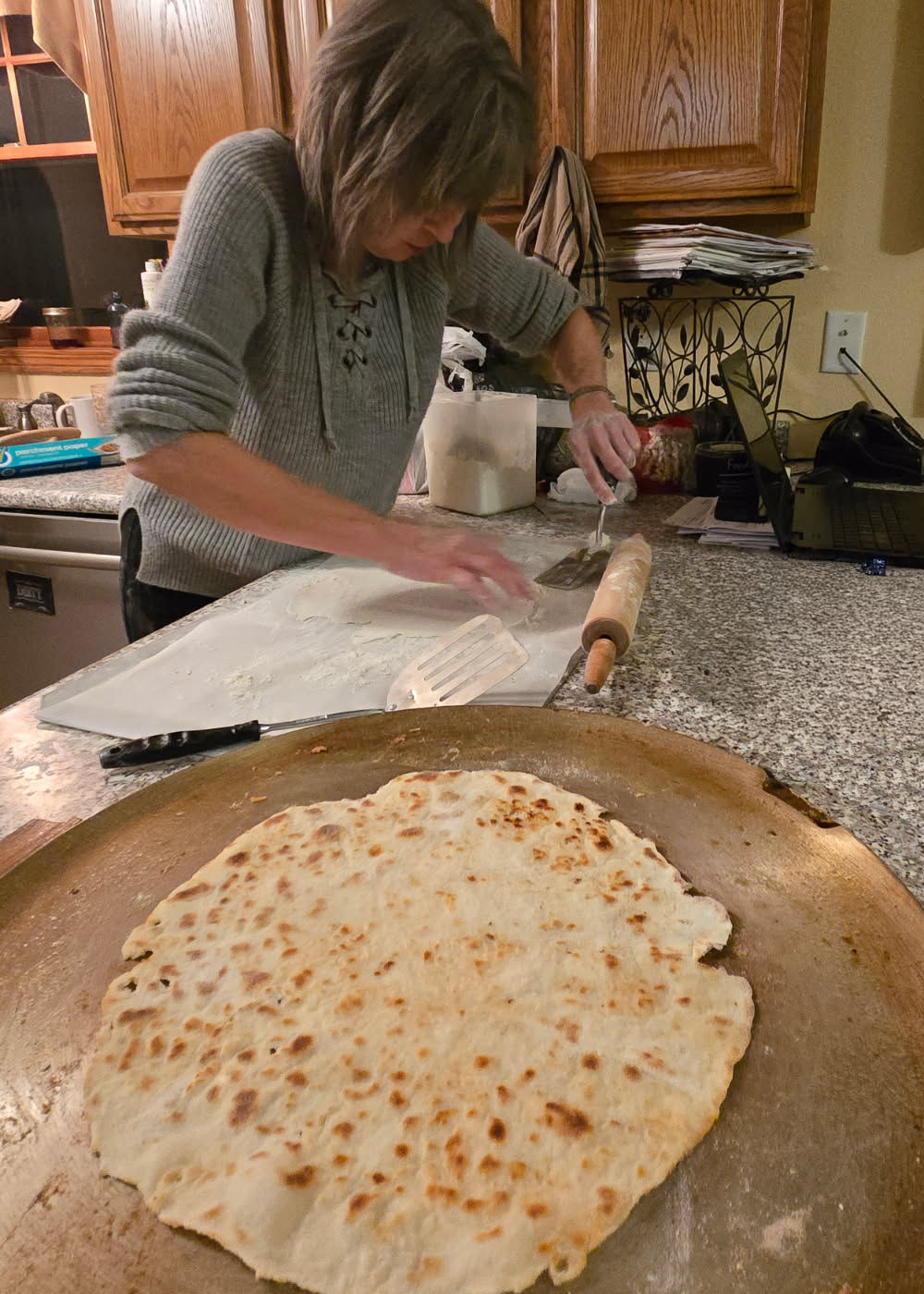
It quickly became apparent that the only part I should do in the "cooking" process was rolling out the dough as thin as possible. From there, I let him remove the dough from the parchment and put it on the griddle. At one point, we thought maybe it was taking too long, so I googled the temperature for the lefse griddle, and it turns out we were cooking it at least 50 degrees colder than it should have been (400 to 450 as opposed to 350).
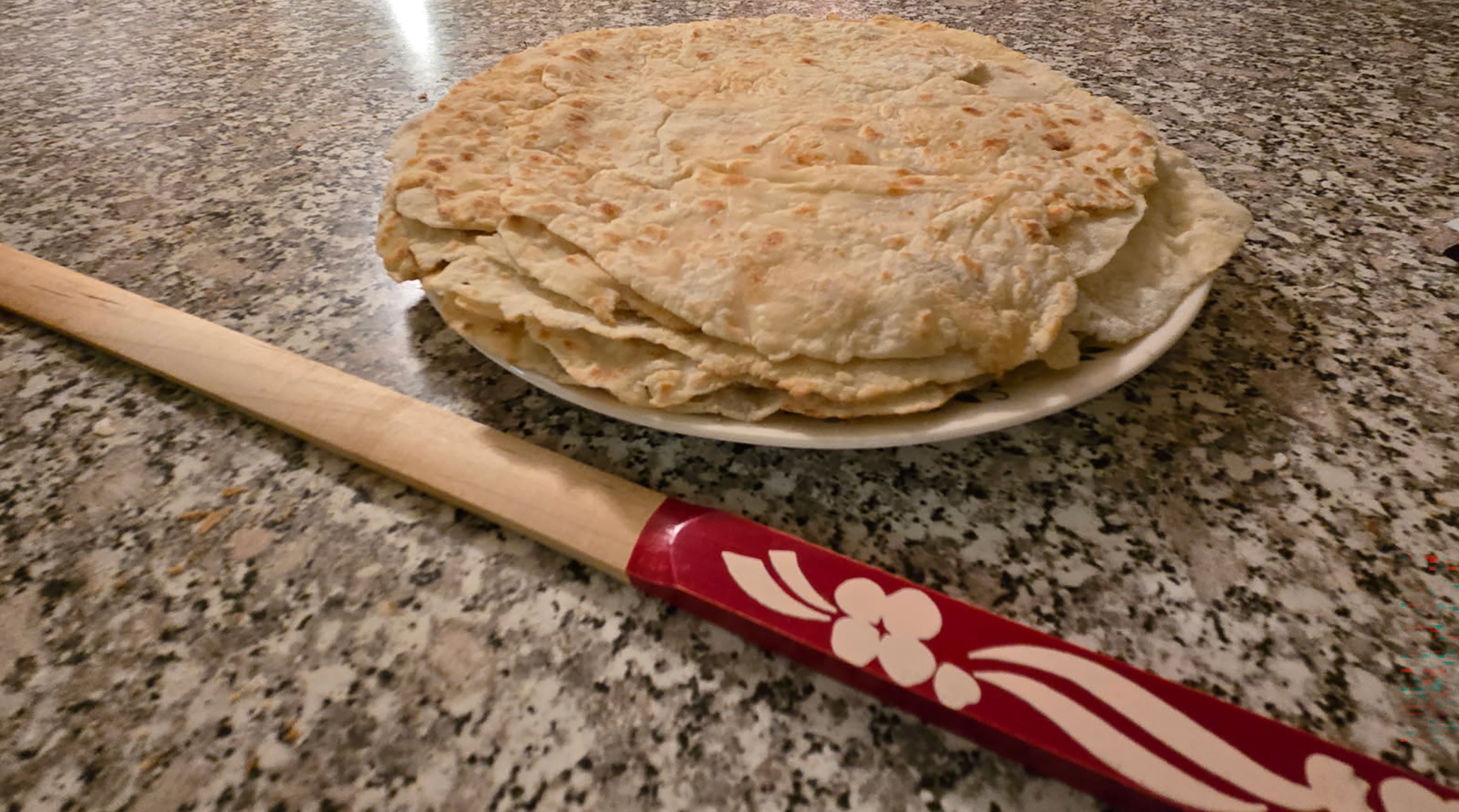
Once we made that change, the process went faster, although it still took the rest of the evening — we didn't even get supper — to complete a total of 15 rounds.
We taste-tested the inaugural piece, which was a bit on the thick side, with a butter-cinammon-sugar combination and pronounced it "edible."
Like hubby said, "Between the two of us, since both of us are a quarter Norwegian, we should have a 50% chance of success."
By teaming up and each of us focusing on what we do best, it was more like 75% success. We still have a lot to learn, but at least our first attempt wasn't an unmitigated disaster. We might have to include this in our holiday routine for next year!
Smith-Pfeifer is the editor of On Your Table, and leaves the required fine motor skills of lefse-making to her husband.